
What Is PVC Fabric?
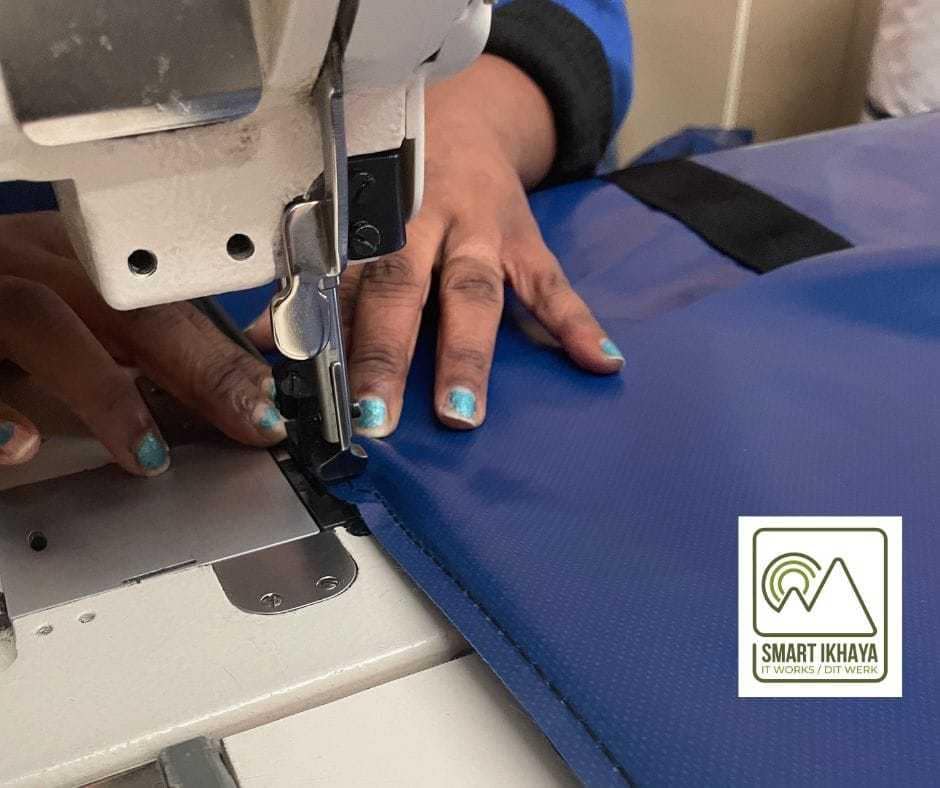
PVC fabric is a waterproof, UV-resistant coated textile made by bonding PVC onto a woven polyester base. It is the standard choice across South Africa for truck curtains, tents, industrial covers, bakkie tarps, and specialist applications like dam liners and grain covers. Smart Ikhaya supplies tarpSMART PVC in 400, 550, 700, and 800gsm from Midrand – cut lengths or full rolls, no minimum order.
Quick answer: which PVC weight do you need?
| Weight | Best for | Why |
|---|---|---|
| 400gsm | Light shade cloth, gazebo curtains, pool enclosures | Lightweight, flexible, easy to handle |
| 500gsm | Bakkie canopies, patio covers, display banners | Good balance of weight and durability |
| 550gsm | Truck side curtains, agricultural covers | Higher tear resistance for daily movement |
| 700gsm | Grain covers, heavy industrial tarps | High abrasion resistance, longer lifespan |
| 800gsm | Dam liners, ground covers, industrial containment | Maximum weight and waterproofing |
Waldo Semon wasn’t trying to invent outdoor fabric.
In 1926, he was working as a chemist at BF Goodrich in Ohio, trying to develop a synthetic adhesive that could bond rubber to metal. The project wasn’t going well. What he ended up with instead was a flexible, rubbery gel that didn’t do what he intended – but turned out to be something far more useful.
He had accidentally created plasticised polyvinyl chloride. PVC.
Semon quickly realised that the material could coat fabric and make it waterproof – resistant to the kind of sustained exposure that destroyed ordinary textiles. Within a few years, BF Goodrich was selling it under the trademark Koroseal, used for coated cloth, electrical insulation, and industrial seals.
What started as a failed adhesive experiment became one of the most widely used industrial materials in the world.
The Problem It Was Built to Solve
Outdoor materials fail.
Not all at once – gradually. Sun breaks down fibres. Rain finds weak points in seams. Wind works at edges and joins. Abrasion wears surfaces thin over months and years. The materials that cannot handle sustained exposure end up costing more in replacements than the original saving was worth.
For anyone making covers, tents, tarps, or industrial enclosures, the question is not whether the material will be tested. It will. The question is whether it was built to handle it.
PVC fabric’s properties – a waterproof coating, UV resistance, structural flexibility, and the ability to be heat-welded into leak-proof seams – turned out to be a precise answer to that problem. Not by design initially. But once the material found its way into industrial fabric applications in the 1950s, it did not leave.
What PVC Fabric Actually Is
PVC fabric is not a woven textile. It is a coated one.
Think of it in two parts. There is the base – a strong woven polyester fabric, the same kind of material used in seatbelts and industrial strapping. Then there is the coating – polyvinyl chloride applied to both sides of that base under heat and pressure.
That dual-coat construction is what makes PVC fabric waterproof. Not water-resistant like canvas – waterproof. The coating forms a continuous barrier on both surfaces. Water cannot pass through it.
The coating also bonds directly to the base fabric rather than being laminated on top of it. This matters because laminated coatings can eventually separate – peel away from the base after years of folding, heat, and UV exposure. Direct-coated PVC resists this. The bond between the coating and the base holds, even under the kind of daily handling that truck curtains and event tents go through.
A failed adhesive experiment in Ohio in 1926 is now the standard material for truck curtains on the N1 and marquee tents across KZN.
Why PVC Found a Home in South Africa
South Africa is hard on outdoor materials.
One day it is 38 degrees and cloudless. The next week it is a summer thunderstorm. In the Highveld, UV intensity is among the highest in the world. On the coast, salt air accelerates degradation. In farming areas, dust and abrasion are daily realities. Industrial covers, transport tarps, and event structures are expected to perform through all of it – often for years at a time.
PVC fabric was engineered for exactly these conditions. The UV-stabilised coating resists fading and brittleness. The waterproof barrier holds under heavy rain. The dual-coat construction survives the repeated folding and handling that truck curtains and event tents go through daily. And because tarpSMART PVC is locally manufactured, the material is formulated and tested for African conditions – not imported and adapted.
Which Weight Is Right?
PVC fabric is measured in grams per square meter – GSM. The higher the number, the heavier, thicker, and more durable the material. Choosing the correct weight matters more than most buyers expect. Under-specifying is the most common reason PVC fabric fails before its time.
Quick Guide: Which tarpSMART Weight Is Right?
| Weight | Grade | Best for |
|---|---|---|
| 400gsm | Lightweight | Light covers, linings, gym mats, short-term protection |
| 550gsm | Standard | Bakkie covers, tents, awnings, general tarps, jumping castles |
| 700gsm | Heavy-duty | Truck curtains, grain covers, marquee tents, industrial covers |
| 800gsm | Extreme duty | Dam liners, mining tarps, marine applications, permanent structures |
How PVC Fabric Is Joined
One of PVC’s most practical advantages over canvas is that it can be welded. When two pieces are joined using heat, the coating fuses together into a single continuous surface – not held by thread, but bonded. A correct weld can match the strength of the fabric itself, and unlike stitching, it will not allow water to wick through needle holes.
Radio waves generate heat inside the material itself. The preferred method for 700 and 800gsm – consistent, high-strength seams across long joins. Used by truck curtain and marquee tent manufacturers.
Applies heat directly to the seam. Well-suited to 550gsm for bakkie covers, bags, and event structures. Widely used by manufacturers and upholsterers across South Africa.
Industrial cold-weld system for repairs and on-site fabrication. Cures to a waterproof, flexible join that moves with the fabric under tension. No heat equipment needed.
Where You Will Find PVC Fabric in South Africa
Some applications are industrial. Others are closer to home. PVC fabric is one of those materials most people interact with daily without thinking about what it is.
Truck side curtains, tautliners, trailer tarpaulins, and bakkie covers. The largest single use of heavy PVC fabric in South Africa.
Grain covers, poultry house curtains, and equipment covers on farms across the Highveld, Free State, and Northern Cape.
Marquee tents, event tent roofs, and pitch covers. If you have been to an outdoor event in South Africa, you have almost certainly been inside a PVC tent.
Factory partitions, construction tarpaulins, machine covers, and heavy-duty protective covers for mining equipment.
Boat covers, jet ski covers, and canopies for equipment stored outdoors year-round in salt air and coastal conditions.
Dam liners, pool covers, and grain covers – specified and tested for the job, not adapted from standard tarpaulin grades.
Why the Construction Still Matters
The accidental discovery Waldo Semon made in 1926 solved a problem he had not set out to solve. But the problem itself – how do you make a material that survives sustained outdoor exposure? – was very real, and it has not gone away.
Outdoor fabrics still get tested every day. Sun, rain, wind, abrasion, and time are constant. The covers and structures that hold up are the ones built for it from the base fabric up – not adapted from lighter-duty applications and pressed into service.
PVC fabric’s dual-coat construction, UV-stabilised coating, and direct-bond polyester base are not over-engineering. They are the answer to a straightforward question that anyone making covers, tents, or industrial enclosures eventually has to answer correctly.
Choose the right weight. Start with the right construction. The rest follows.
No minimum order lengths required. Discount applies on bulk orders of five full rolls or more. Daily dispatch from our Midrand warehouse.
PVC fabric FAQ
What is the difference between PVC fabric and canvas tarpaulin?
PVC fabric is a coated textile – waterproof by construction, weldable, and easy to wipe clean. Canvas is a woven textile that is water-resistant but breathable. The practical difference comes down to your application. If you need 100% waterproofing and low maintenance – bakkie covers, truck curtains, pool covers, industrial tarps – PVC is the right choice. If breathability matters more than complete waterproofing, such as for safari tents and outdoor awnings where airflow is part of the design, canvas is worth considering. Most buyers in South Africa end up using both for different applications.
What GSM PVC do I need for a truck curtain or marquee tent?
700gsm is the standard choice for truck side curtains and tautliners. It is rated for high flex cycles without cracking or delaminating. For marquee tents and event structures, 550gsm is commonly used for sidewalls, with 700gsm for the roof where water pooling and wind load are higher. If you are unsure, contact Smart Ikhaya and we will advise based on your specific application.
Can PVC fabric be repaired if it tears?
Yes. Small tears and punctures can be repaired using glueSMART cold-weld adhesive, which bonds PVC to PVC and cures to a waterproof, flexible join. For larger damage or structural repairs on covers and tents, a heat-welded patch using matching PVC fabric gives the most durable result. Many upholsterers and canvas repair workshops across South Africa work with PVC fabric daily using standard hot-air equipment.