
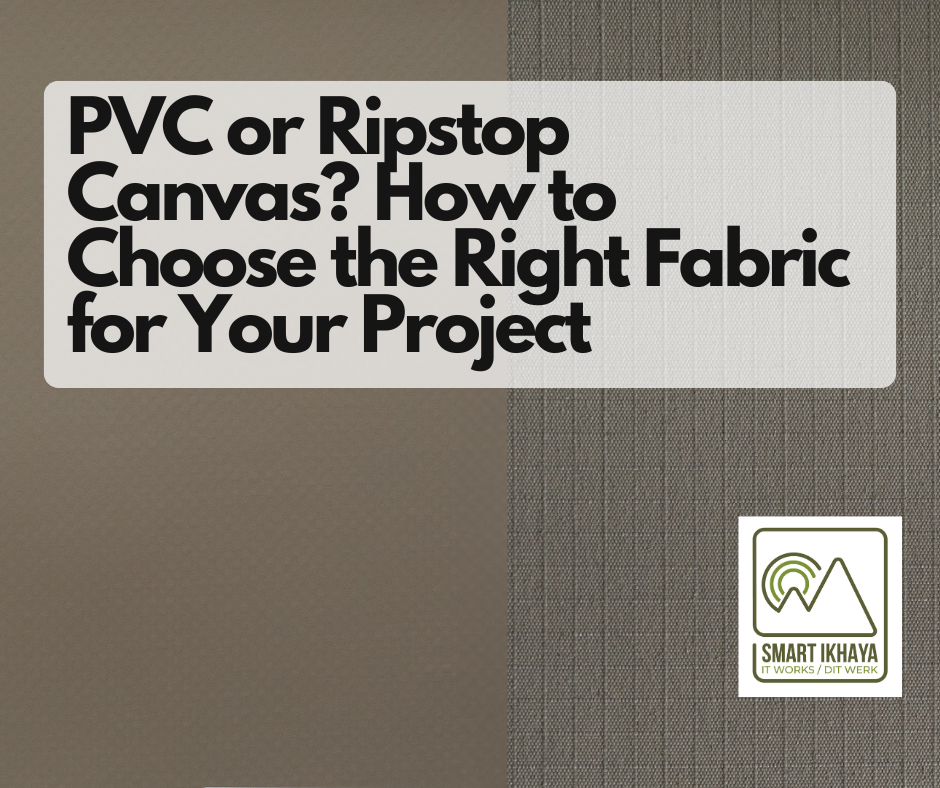
Both PVC-coated fabric and ripstop canvas are strong, durable, and weather-ready – but when it comes to your specific project, which one is the smarter choice?
Whether you’re making a trailer cover in Mpumalanga, sewing trailer cover in Cape Town, or manufacturing tents in Joburg, choosing the right material is the first step to a successful, long-lasting result.
Here’s a detailed breakdown of how PVC and ripstop canvas compare, and when to use each:
PVC: The Heavy-Duty Defender
PVC fabric is a polyester-based textile coated with Polyvinyl Chloride, engineered to handle moisture, high tension, and tough South African conditions. It’s an industrial-grade material known for its sheer strength and impermeability.
Key Benefits:
- UV & Tear-Resistant: Built to last under the harsh African sun and resist punctures and tears.
- 100% Waterproof: The plastic coating creates a solid, non-porous barrier against water.
- Seamless Joins: Can be professionally joined using high frequency creating seams as strong and waterproof as the material itself.
- Exceptional Strength: Withstands constant tension and strain, making it ideal for large, taut applications.
- Heavy-Duty Weights: Available in weights from 400gsm to 800gsm, offering superior durability.
Best for:
- Truck curtains, trailer tarps, and bakkie covers.
- Industrial, mining, and agricultural tarpaulins requiring maximum durability.
- Tents, tent floors, groundsheets, and dam liners.
- Architectural structures and high-tension marquees.
Pro-Tip for Working with PVC: For a professional, waterproof seal, welding is the best method. Always cut PVC with a sharp scissor against a straight edge for the cleanest finish.
Ripstop Canvas: The Breathable Outdoor All-Rounder
Ripstop canvas is a woven polyester (or poly-cotton) fabric with a grid of reinforcement threads woven into it. This grid stops small tears from spreading, giving the fabric its name.
Why People Love It:
- Breathable: Allows air and moisture vapour to pass through, reducing condensation and making it ideal for tents and canopies.
- Lighter & More Flexible: Generally lighter than heavy-duty PVC, it’s easier to fold, handle, and sew.
- Textured Aesthetic: Offers a classic, natural fabric look and feel.
- Easy to Work With: Can be cut and sewn with standard heavy-duty equipment.
- Tear-Resistant: The reinforced grid design prevents catastrophic failures from small nicks or punctures.
Great for:
- Safari tents, gazebos, and tent sides.
- Trailer lids and bakkie covers where breathability is a plus.
- Outdoor bags, backpacks, and camping gear.
- Outdoor upholstery and furniture covers.
- Event structures and versatile shade systems.
Pro-Tip for Working with Ripstop: To maximize water resistance on your finished product, apply a seam sealer along the stitch lines after sewing.
Head-to-Head Comparison: PVC vs Ripstop Canvas
| Feature | PVC Fabric | Ripstop Canvas |
| Waterproofing | 100% Waterproof | Water-Resistant |
| Breathability | No | Yes |
| Flexibility | Medium | High |
| Joining Method | Weldable / Adhesives / Sewable* (* losing waterproofness) | Sewable |
| Look & Feel | Plastic / Smooth | Natural / Textured |
| Fire Retardancy | Can be treated to meet standards | Can be treated to meet standards |
What Works Best in South Africa?
PVC fabric is your champion for projects demanding uncompromising strength and water protection against harsh sun and heavy rain. Think of a truck tarp battling a Highveld thunderstorm or a pool cover baking in the Karoo sun – PVC is built for that.
Ripstop canvas shines in applications where breathability, lighter weight, and aesthetics are key. It’s perfect for a family tent on the Garden Route, a flexible trailer lid for a weekend camping trip, or stylish outdoor cushions in a Durban home.
A Quick Note on Care & Maintenance
To get the most life out of your fabric, proper care is essential.
- For both fabrics: Clean regularly with a soft brush, mild soap (like Sunlight liquid), and cold water. Avoid harsh detergents, solvents, or abrasive cleaners.
- For Ripstop Canvas: Ensure the fabric is completely dry before storing it to prevent mildew. Over time, you may want to re-apply a waterproofing to maintain its water-repellent properties.
Final Thoughts – Work Smarter with the Right Material
Your project’s success hinges on choosing the right foundation.
- If you’re after maximum water protection, industrial-grade durability, and strength – go with PVC.
- If you value flexibility, breathability, a lighter weight, and a more natural finish – ripstop canvas is your best bet.
The best part? At Smart Ikhaya, you don’t have to choose between quality and variety. Smart Ikhaya stocks both. We cut to your required length, with no minimum order size. We stock a wide range of colours to match your project’s aesthetic. We’ll help you make the smart choice. Contact us now.
Browse Ripstop Canvas › | Explore PVC Fabric ›
Frequently asked questions about PVC and Ripstop
Is PVC better than canvas? It depends entirely on your needs. For 100% waterproofness and high-tension use, PVC is superior. For applications needing breathability and a lighter, more flexible material, ripstop canvas is the better choice.
What does GSM mean, and which one do I need? GSM stands for “Grams per Square Metre” and is a measure of the fabric’s weight and density. A higher GSM generally means a thicker, stronger, and more durable fabric. For light-duty covers or bags, a lower GSM ripstop might work. For a heavy-duty truck tarp, you’d want a high GSM PVC like 700gsm or 800gsm.
Can ripstop canvas be made fully waterproof? Coated ripstop canvas is highly water-resistant and will keep you dry in most conditions. However, because it is sewn, the needle holes of the seams can be a potential point of water entry. This can be mitigated with seam sealers, but for a 100% waterproof barrier, welded PVC is the guaranteed solution.
Which lasts longer in the sun? Heavy-duty PVC (700gsm or 800gsm) is extremely UV-stable and designed for long-term, permanent sun exposure. That said, quality coated ripstop also performs very well with proper care.
Where can I buy both PVC and ripstop canvas in South Africa? Right here at Smart Ikhaya! We stock a wide variety of both fabrics, available by the metre in a range of colours and GSM weights to suit any project, big or small.
Blog Posts
You might be interested in some of our other posts and guides. See below for a list of categories and previous posts:
Smart Ikhaya = It works
Author, Date, Article Name
 Smart Ikhaya